
The Drive-In Theatre — What America Lost
On a warm summer night, the whole town was at the movies, and nobody had left their car.
The drive-in started in 1933, when a man in Camden, New Jersey, put a movie screen up in a field and charged drivers to watch from their cars. It caught on fast. By the late 1950s there were more than four thousand drive-ins across America, one on the edge of nearly every town.
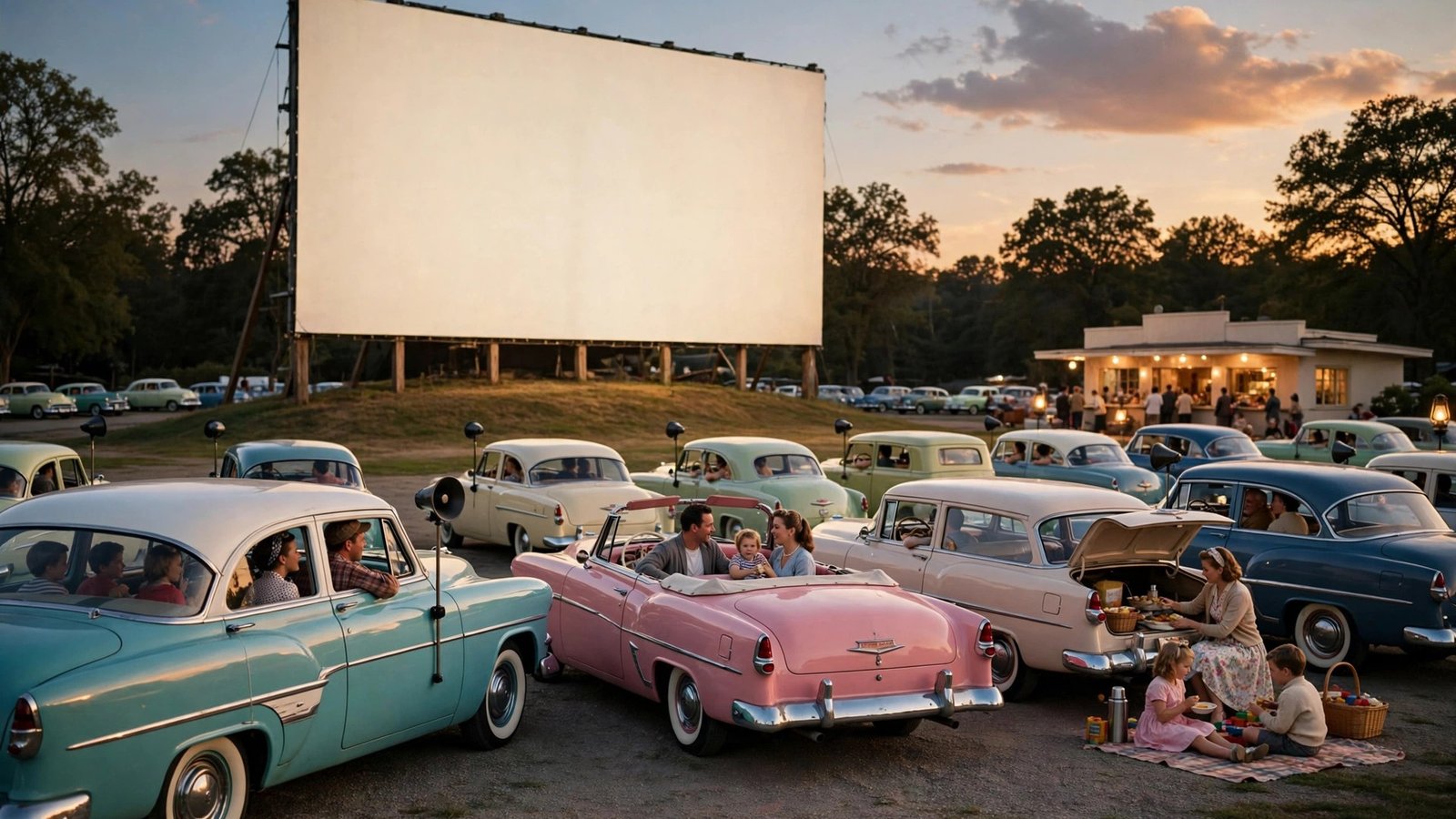
It was a different kind of night out. You drove in, found a spot on the gravel, and clipped a tinny little speaker to your window. Kids in pajamas piled into the back seat. Teenagers hid friends in the trunk to save the ticket price, and everybody knew it, and nobody really minded.
The movies came two at a time, a double feature, with cartoons and a snack-bar ad in between. The concession stand sold popcorn and hot dogs and soda, and the smell of it drifted over the whole lot. On a good night, the stars came out above the screen, and for a little while the car felt like the best seat in the world.
Then the land got valuable, and the daylight got longer, and the video store arrived, and the movies you used to drive to see started coming to your living room instead. One by one, the screens went dark. The lots became shopping centers and housing, and the big white screen came down.
A few hundred drive-ins are still open today, and on a summer night you can still find one, the speaker crackling, the kids in pajamas in the back seat. But the drive-in is no longer the way America watches a movie. It is a memory of when the car, the night, and the picture were all part of the same evening.