
The TV Technology We Almost Had — What America Lost
Here's a weird thought. Television almost looked nothing like television. Before the TV we know, there was a different one. It ran on a spinning disc.
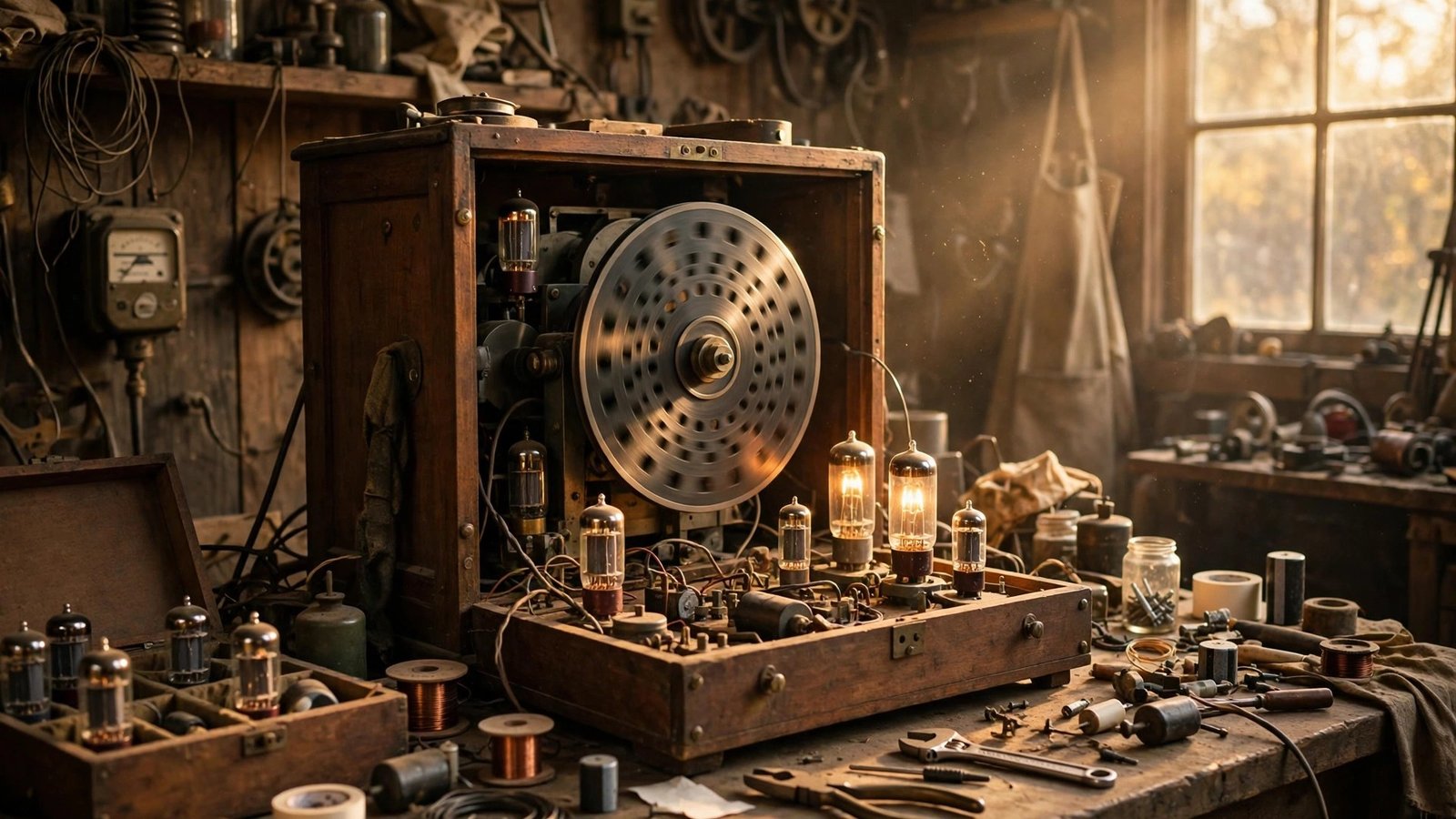
In 1926, a Scottish inventor named John Logie Baird showed the world the first moving television pictures. The pictures came from a metal disc with holes in it, spinning fast in front of a light. They called it mechanical television. The picture was small and fuzzy, and the machine rattled and hummed while it worked. People stood there amazed anyway.
For a few years, in the early 1930s, you could actually walk into a store and buy one. A wooden cabinet, a little round window, and behind that window a disc spinning away, painting the picture one line at a time. Families gathered around it the same way they'd later gather around the sets we know.
But the disc had a ceiling. It could never make a picture as sharp or as big as the other kind of television being built at the same time. The electronic kind. No moving parts, just a beam of light drawing the picture on a glass screen. By the middle of the 1930s, the electronic set had won, and the mechanical one was finished.
It's strange how close it came. If the electronic television had taken a few more years, the spinning disc might have ended up in every living room. Then the whole shape of television could have been different. The cabinet, the screen, the way we watch. All of it.
The disc television is gone now, except in museums. But every time some shiny new gadget shows up, I think about that disc. The future doesn't always pick the best idea. Sometimes it just picks the one that got there first.