
The Paperboy — What America Lost
Long before the phone buzzed with the news, the news arrived on a bicycle.
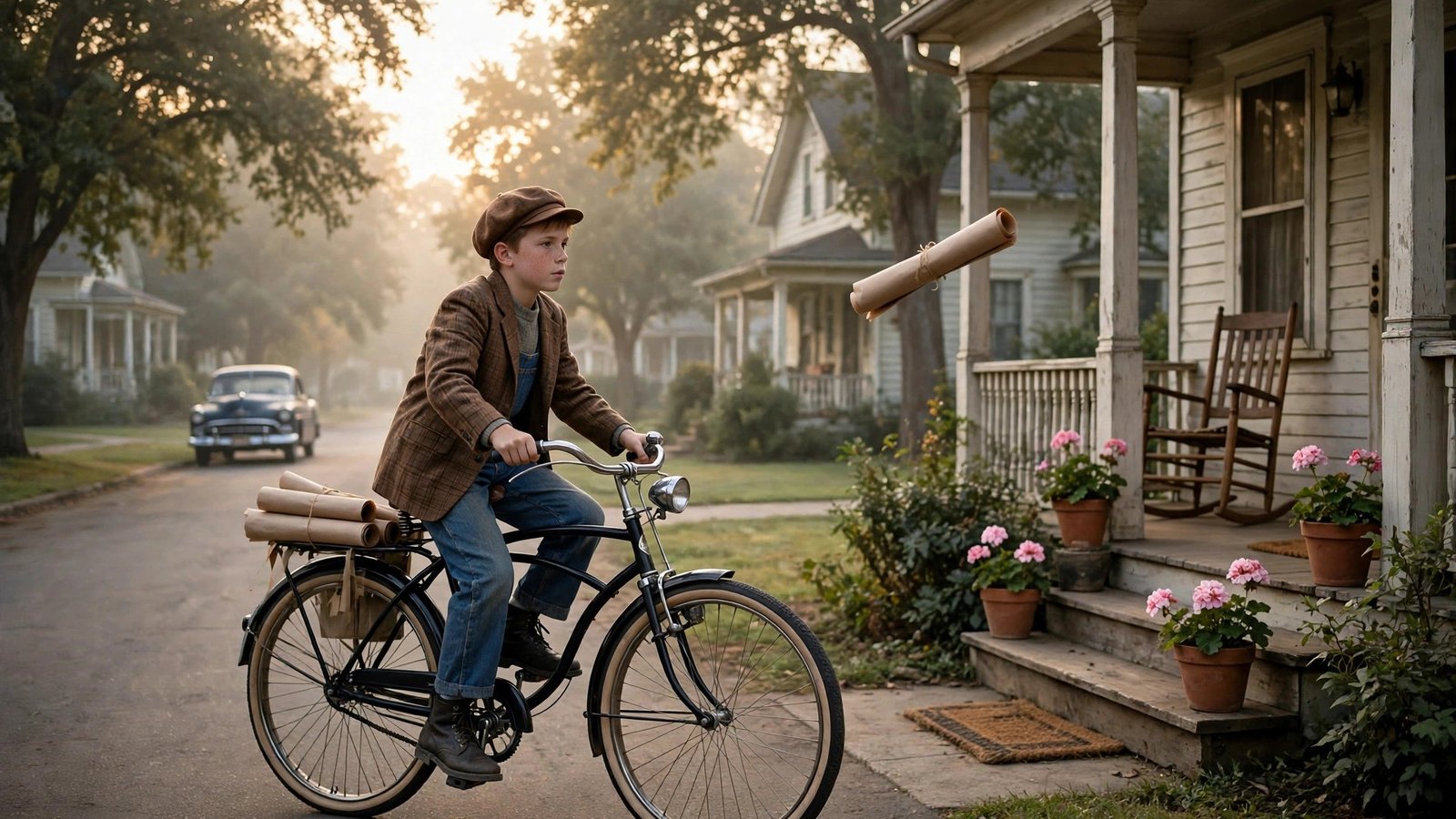
For most of the twentieth century, the paperboy was the first person up on the street. Early in the morning, he folded the papers, stuffed them into a heavy canvas bag, and rode his route house by house, tossing each paper onto the porch. A good paperboy could land one on the doormat from the curb without slowing down.
It was a kid’s job, and it was a real job. The paperboy collected the money himself, knocking on doors once a week with his little book, and he kept what was left after he paid the paper. He learned the route, the dogs, the houses where the porch light was always on, and the customers who always paid late.
The paperboy was also the morning itself. The sound of the bike, the thump of the paper on the porch, the smell of fresh ink — that was how a neighborhood woke up. People read the news at the breakfast table, and the paperboy was the one who put it there.
Then the papers got thinner, and the morning paper became the evening paper, and then there was no paper at all. The routes got longer, the bundles got heavier, and the job stopped being a kid’s job. Grown-ups took it over, in cars, in the dark, and the bicycle disappeared from the route.
Today the news arrives on a screen, and it arrives all day long. But nobody tosses it onto your porch, and no kid on a bicycle knows your house by heart. The paperboy was a small job, and it was a big part of the morning, and the morning has never sounded quite the same without him.