
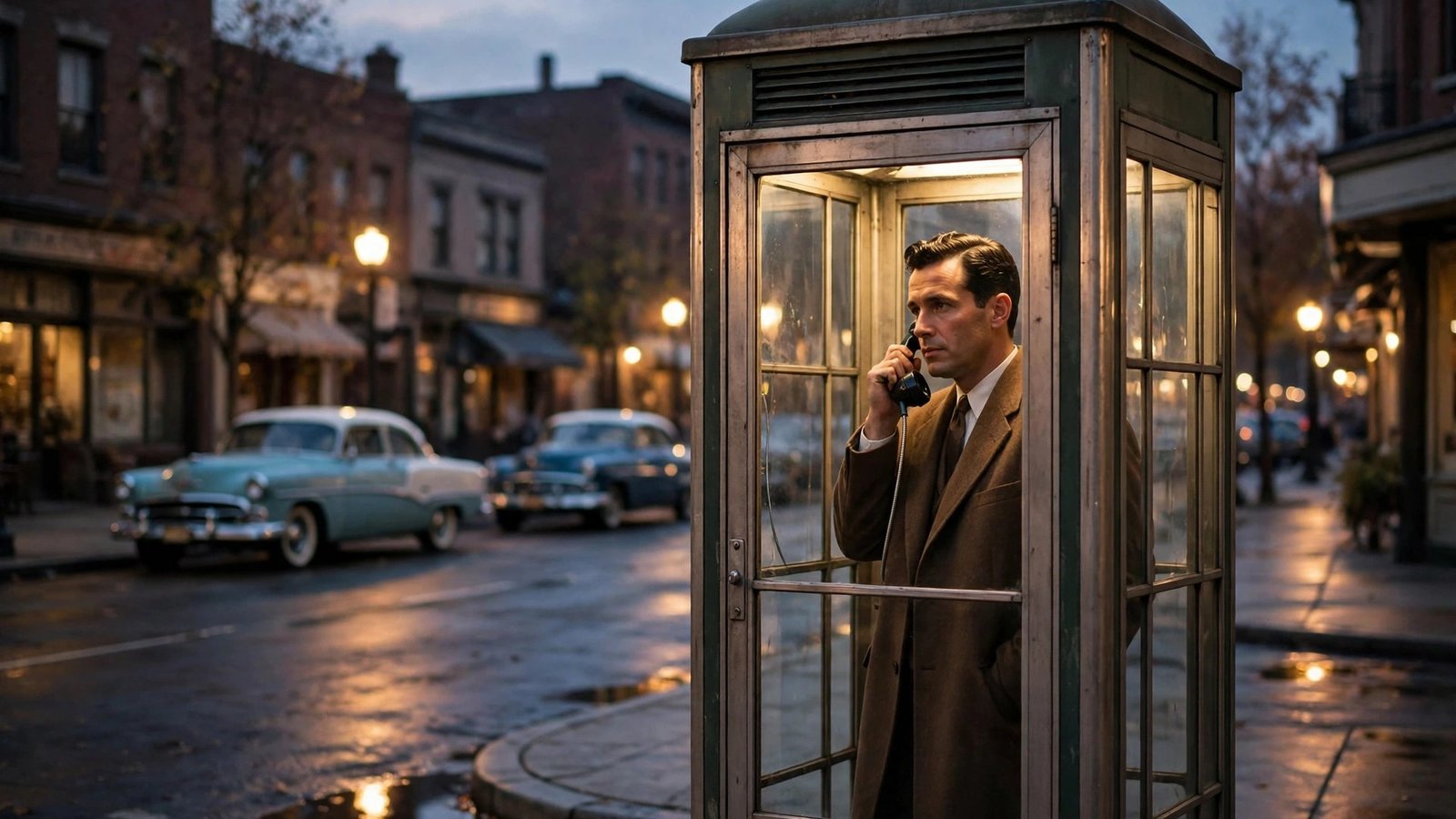
The Phone Booth — What America Lost
There was a time when making a phone call meant going somewhere.
The phone booth stood on street corners and in drugstores and hotel lobbies, a little glass box with a folding door and a phone book hanging on a chain. You stepped inside, dropped a dime in the slot, and called home. If you needed to talk for a long time, you fed it more dimes. If you were calling collect, you said so, and waited for the voice on the other end to say yes.
The booth was a private place in the middle of public life. People made the most important calls of their lives from phone booths — to tell a mother a baby had been born, to ask a girl to marry them, to say they had gotten the job. And in the movies, it was where the mild-mannered reporter stepped in and came out a hero.
Every booth had a phone book, thick and heavy, with everybody’s number in it. If you needed a plumber at midnight, you looked him up under the yellow light and dialed with your finger in the round holes of the dial. It was slow, and it worked.
The cell phone ended it. Why walk to a booth when the phone is in your pocket? The booths came down one by one, and the phone books went with them. New York City took down its last public pay phones in 2022, and the city that once had them on every corner suddenly had none at all.
A few booths are still standing, mostly as decoration, or as a place to take a picture. But the glass box where you once closed the door and called home is gone, and with it went the idea that a phone call was something you went out to make.