
The Video Rental Store — What America Lost
Friday night used to start with a walk down the aisles.
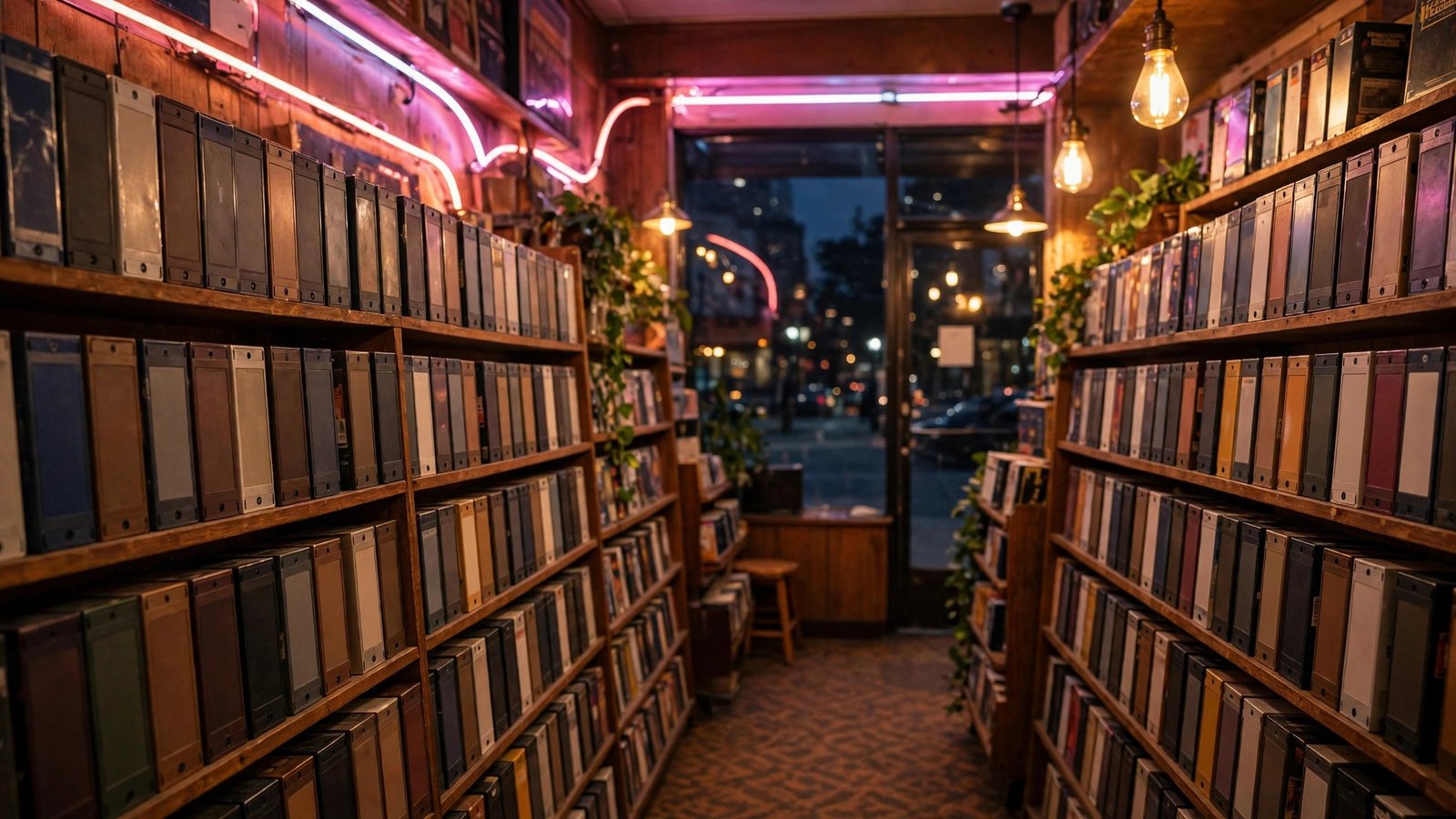
The video rental store opened in the 1980s, and for a generation it was the center of the weekend. You walked in and the whole wall was movies — new releases up front, comedies on one wall, horror in the back, and a children’s section with the tapes worn soft from a thousand little hands. You read the backs of the boxes, argued with your brother about which one to get, and hoped the one you wanted was actually in stock.
Renting a movie was a ritual. You picked it, you paid for it, you took it home, and you had to bring it back by Sunday, rewound. The sticker on every tape said “Be kind, rewind,” and the fine for forgetting was real money. The clerk behind the counter knew your taste, and sometimes steered you to something you had never heard of, and sometimes he was right.
The biggest chain, Blockbuster, opened its first store in Dallas in 1985, and at its height there was one on nearly every main street in America. Friday night meant a line at the counter, a bag of popcorn from the rack by the register, and a movie you had chosen with your own hands.
Then the movies started arriving in the mail, and then they started arriving through the internet, and then they were simply there, all the time, on the screen in your living room. The stores closed one by one. Blockbuster went bankrupt in 2010, and today only one store is left, in Bend, Oregon, kept alive as a museum and a memory.
We can watch anything now, any time we want, and we never have to leave the couch. But we also never have to choose together, in a store full of movies, on a Friday night. The video store was not just a place to get a movie. It was the Friday night itself.