
The Ice Man — What America Lost
Before the refrigerator, there was a man who brought the cold to your door.
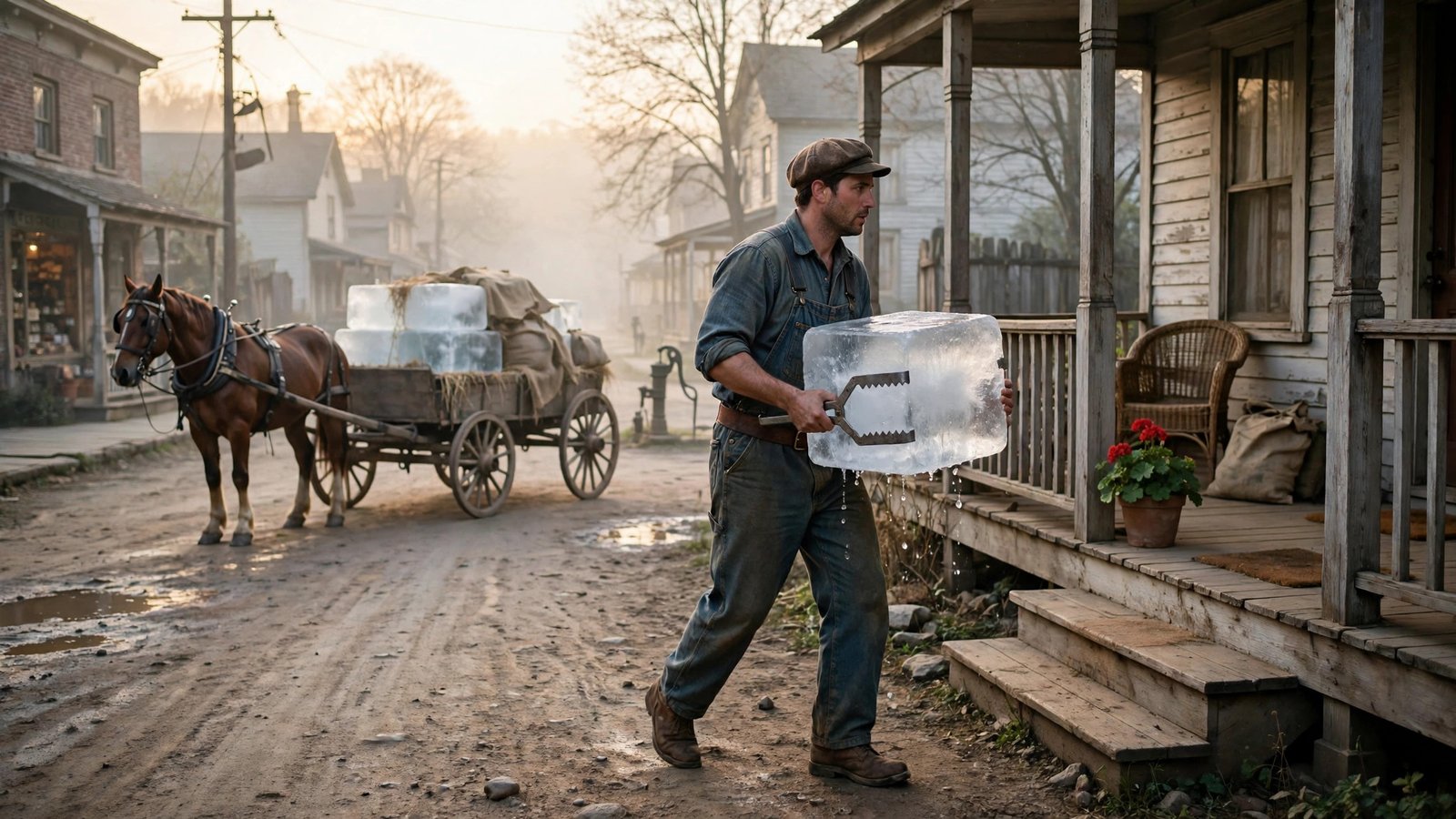
The ice man drove a horse-drawn wagon through the streets, carrying great blocks of ice cut from frozen lakes in the winter and stored through the summer in sawdust in big icehouses. The trade began in Boston in the early 1800s, when a merchant known as the Ice King started shipping New England ice all over the world, and before long every town had its own ice man.
He came on a regular day, and the housewife put a card in the window to tell him how much she wanted — twenty-five pounds, or fifty, or a hundred. He lifted the block with iron tongs, carried it up the back steps on his shoulder, and slid it into the icebox in the kitchen. The children followed him down the street, hoping for a chip of ice to suck on a hot day.
The icebox was a wooden cabinet lined with metal, and the block of ice inside kept the milk and the butter and the leftovers cold. It dripped into a pan underneath, and somebody had to remember to empty the pan, or there would be a puddle on the kitchen floor by morning.
Then the electric refrigerator arrived, and it did not drip, and it did not need a man to carry anything up the steps. Through the 1930s and 1940s, the refrigerator moved into one house after another, and by the 1950s the ice wagon was mostly gone.
Today the ice comes from the freezer, and nobody thinks about where cold comes from. But for a hundred years, cold was something a man delivered, block by block, and the sound of the ice tongs on the wagon was the sound of summer being kept at bay.