
The Soda Jerk — What America Lost
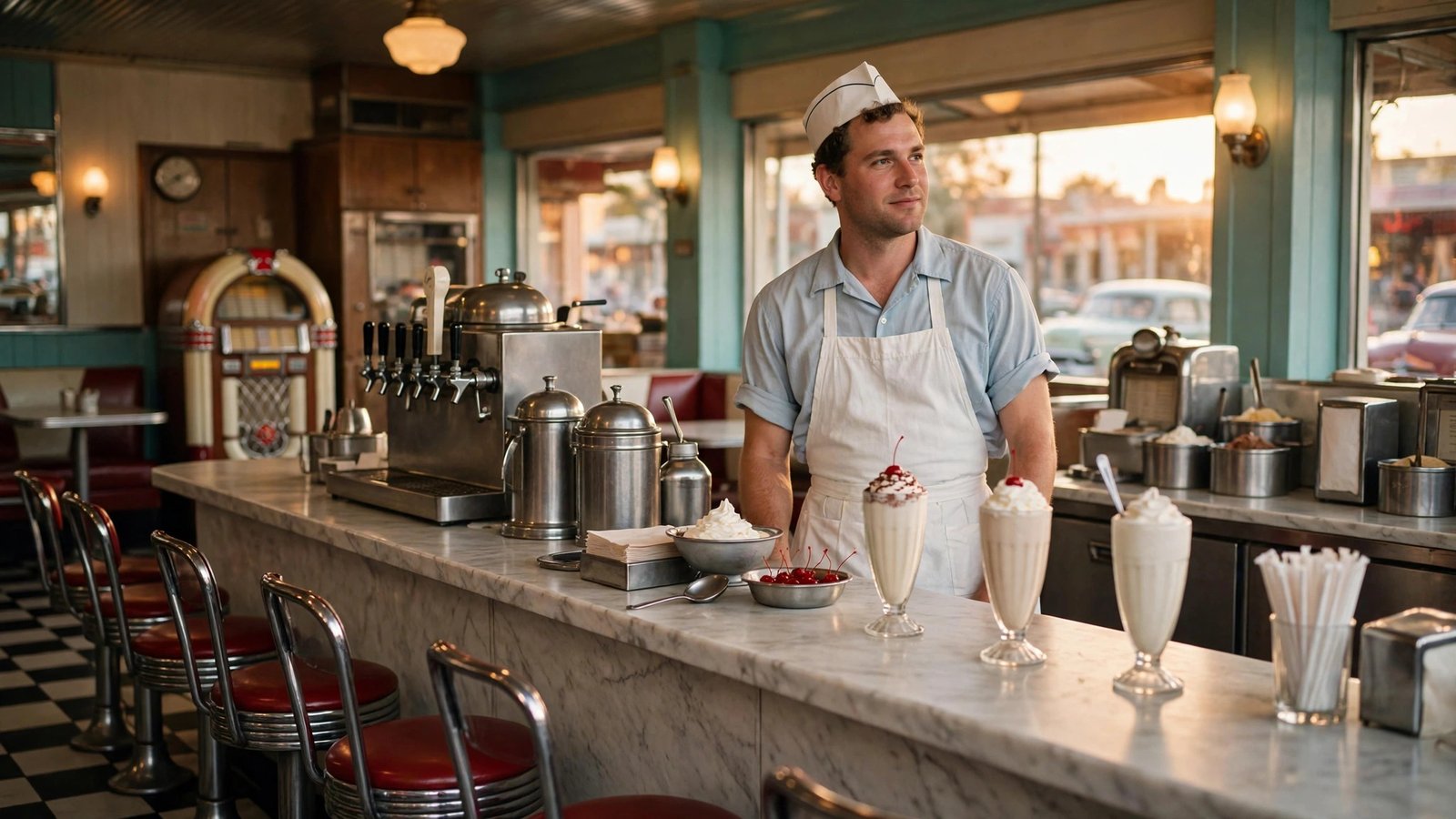
In the middle of the drugstore, where the prescriptions were filled in the back, there was a long marble counter, and behind it stood the soda jerk.
He wore a white shirt and a paper hat, and he worked fast. He pulled the long handle of the soda tap — the jerk that gave him his name — and the fizz came hissing out. He built ice cream sodas and sundaes and egg creams, a chocolate syrup and milk and seltzer, no egg and no cream, and somehow it tasted like childhood itself. He knew the regulars by name, and he knew what they ordered before they sat down.
The soda fountain was the living room of the town. Teenagers stopped there after school, and couples sat there on a first date, two straws in one soda, and old men sat there in the morning with a cup of coffee and the paper. It was the cheapest place in town to sit down, and the friendliest.
Everything was made to order, right in front of you. The ice cream came out of a cold dipper, the whipped cream came out of a can with a spoon, and the cherry went on top last, like a period at the end of a sentence. Nothing came from a bottle, and nothing was in a hurry.
Then the fast-food restaurants arrived, and the bottled drinks arrived, and the drugstores stopped keeping fountains. The marble counters were pulled out, one by one, through the 1960s and 1970s, and the soda jerk’s paper hat went with them.
A few fountains are still open, kept alive by people who remember. But the drugstore counter where the whole town used to sit, where a nickel bought you a cold glass and a little conversation, is mostly gone. And the soda jerk, with his quick hands and his long handle, went with it.