
The Sears Catalog — What America Lost
Before there was a store on every corner, there was a book that was the store.
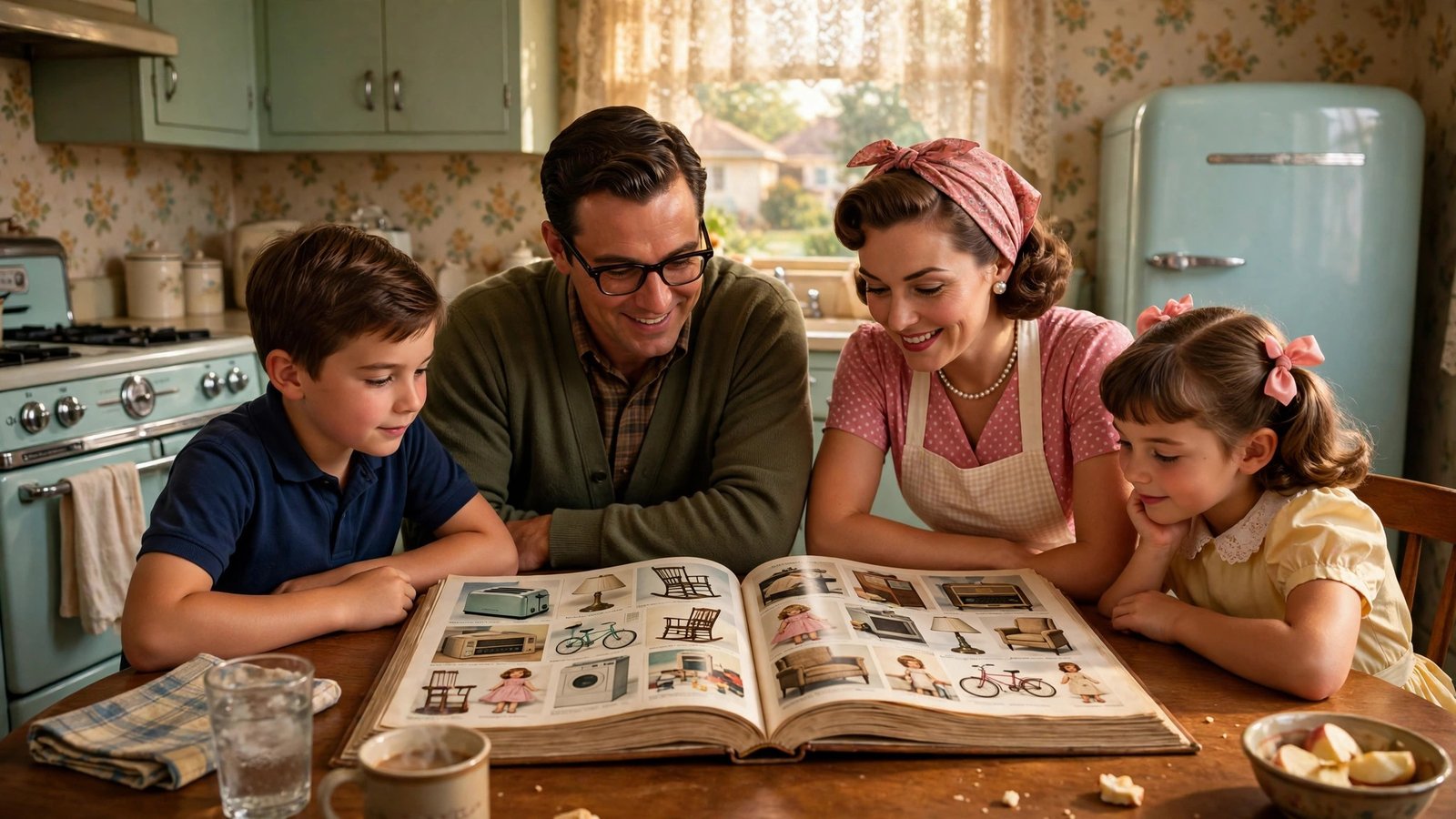
The Sears catalog arrived in the mail, thick as a brick, and for farm families and small towns it was everything. You could order a dress, a plow, a bicycle, a piano, a wedding ring, and a washing machine, all from the same book, and it would all come by train and wagon to your door. People called it the wish book, and children read it like a magazine, circling what they wanted for Christmas.
Sears even sold houses by mail. Starting in 1908, you could order a whole house from the catalog — the lumber, the nails, the windows, the plans — and it would arrive in boxcars, ready to be put together. Thousands of those kit houses are still standing today, in towns all over America, and most of the people who live in them have no idea their house came from a book.
The catalog was more than shopping. It was how the country learned what was new. The pictures showed the latest clothes, the latest stoves, the latest toys, and a family on a farm a hundred miles from the nearest town could see the same things as a family in Chicago, on the same day.
Then the stores came to the small towns, and then the television came, and then the internet came, and the book got thinner and thinner. Sears printed its last big catalog in 1993, after more than a century, and the wish book was over.
We can order anything now, from anywhere, and it arrives faster than the catalog ever could. But the catalog was a book the whole family read together, and nobody ever gathered around a website on Christmas Eve, circling what they wanted with a pencil.