
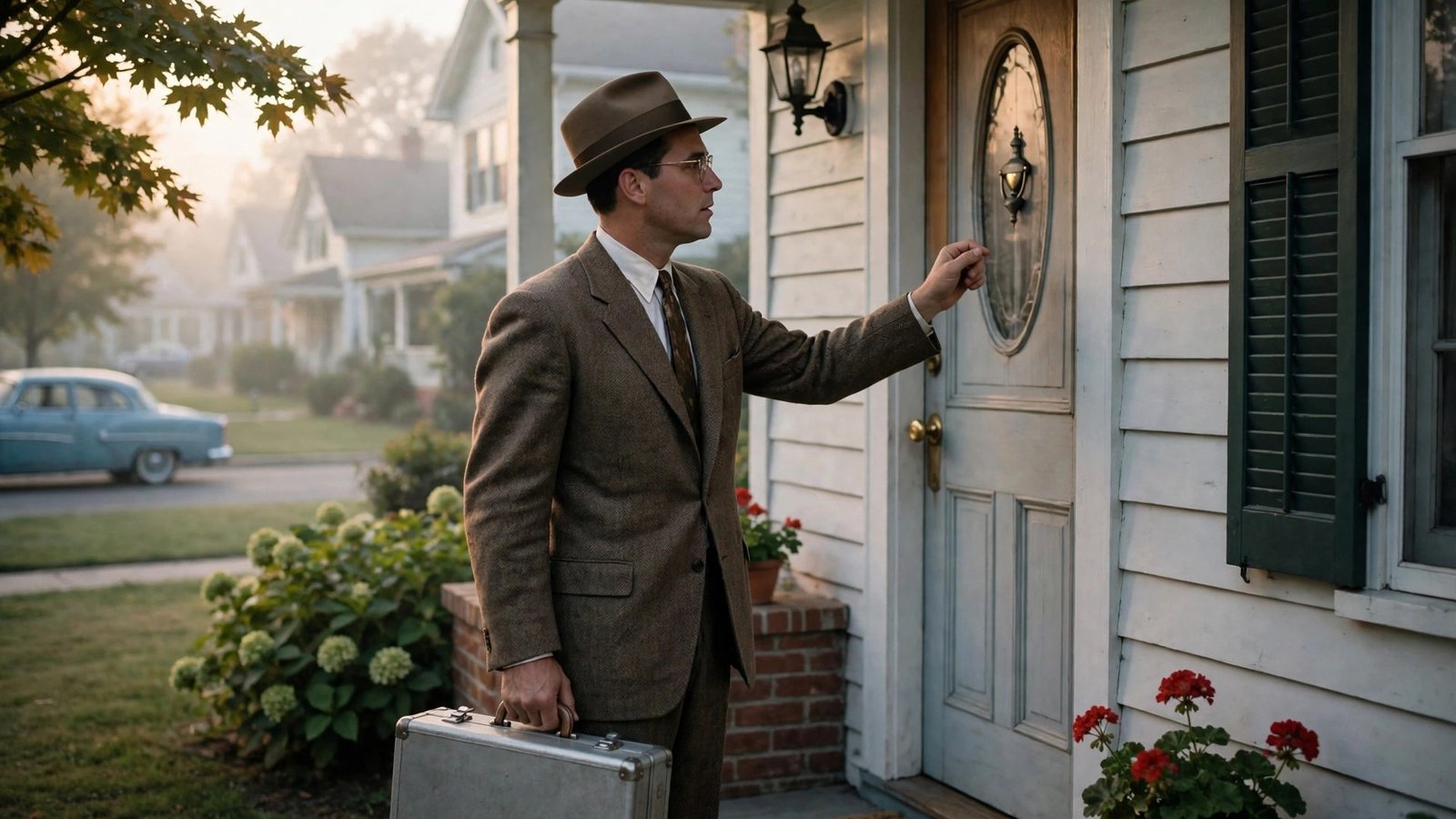
The Door-to-Door Salesman — What America Lost
There was a time when the store came to you.
The door-to-door salesman walked the neighborhood with a case in his hand and a smile on his face. He sold vacuum cleaners and pots and pans, brushes and soap and magazine subscriptions, and he sold them the old-fashioned way: by standing on your porch, showing you the product, and asking for the order. He carried the demonstration with him, and he did it right there in your living room.
He knew the streets, and he knew the hours. He came when the housewives were home, and he came when the kids were home from school. A good salesman could sell a vacuum cleaner to a woman who already owned one, just by showing her the dirt it pulled out of a carpet she thought was clean.
It was a hard way to make a living. The doors that opened were outnumbered by the doors that did not, and the phrase “not interested” was something he heard a hundred times a day. But it was also a way up. For a young man with no money and no connections, a sales case and a territory were a start, and plenty of men built whole lives out of walking and knocking.
Then the world changed. More women went to work, so nobody was home in the daytime. Television did the demonstrating, and the shopping mall did the selling, and the internet did the rest. The knock on the door became a rare thing, and then a strange thing, and then it stopped altogether.
Today nobody sells anything on your porch, and nobody expects them to. But for a long time, the American salesman was a familiar figure on every street, a man with a case and a pitch and a belief that the next door might be the one. The knock is gone, and the street is quieter for it.