
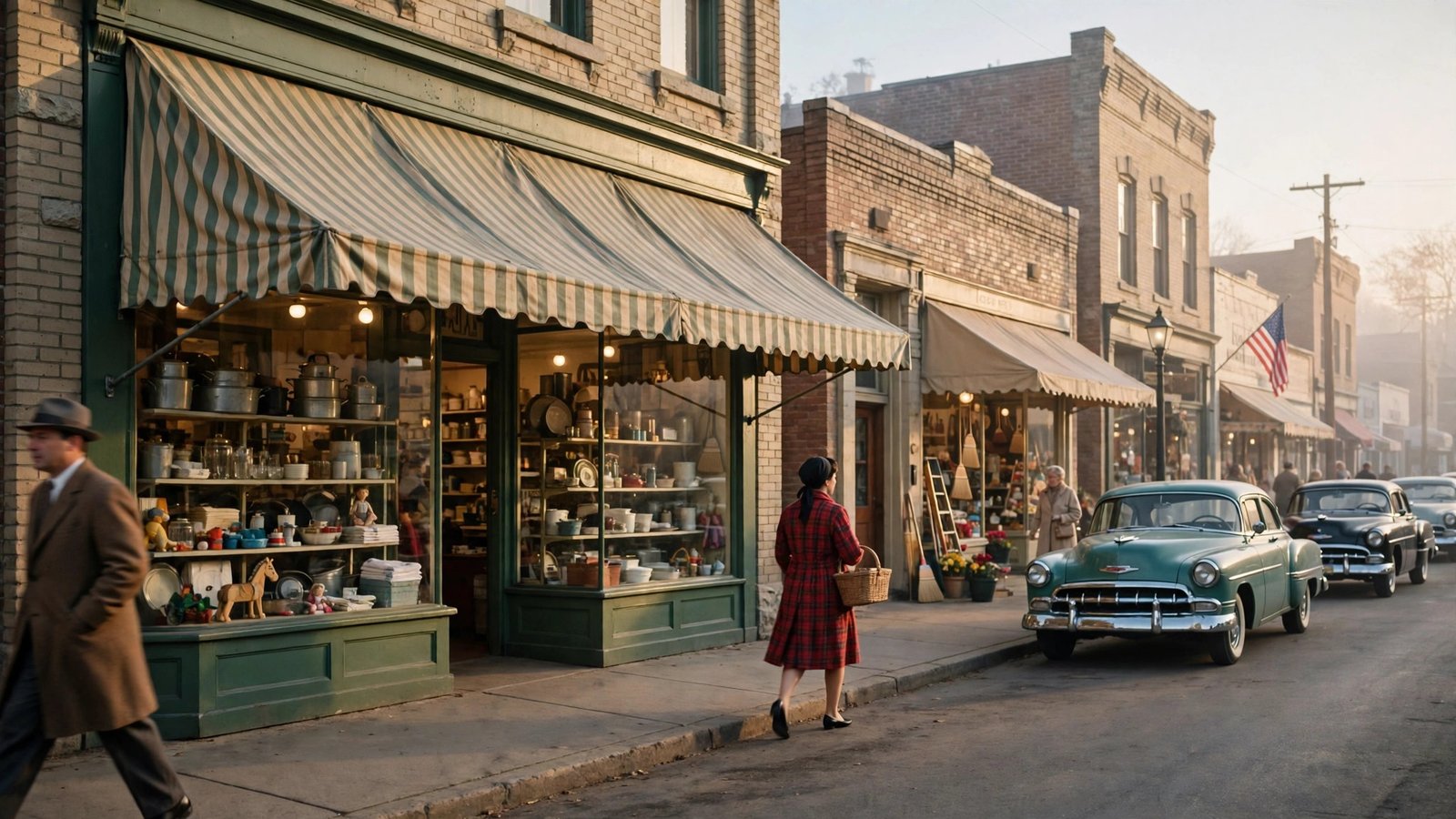
The Five-and-Dime Store — What America Lost
The first errand I ever ran alone was to Woolworth's. A dime in my fist, a spool of thread to buy, and I came back with the thread and a pocketful of penny candy. That was the five-and-dime.
Woolworth's opened the first one in 1879, and soon there was one on every main street in the country. Kresge's, Ben Franklin, McCrory's. All of them the same in the ways that mattered. Long wooden counters, bins of buttons and thread, candy by the pound, toys, school supplies, and a lunch counter in the back where the coffee was a dime and the pie was a quarter.
It was the store for everybody. The farmer's wife bought her sewing needles there. The schoolboy bought his marbles there. The girl saving up for a lipstick bought it there. Nothing was fancy, and everything was useful. You could walk in with a dollar and walk out with a bag full of things, and you felt like you had gotten away with something.
A quarter made a kid rich in that store. A nickel or a dime bought most of what was in it. That was the whole trick of the place. Small money, and a whole store to spend it in.
Then the discount stores came, and then the malls, and then the big boxes on the edge of town, and the little store on Main Street could not keep up. Woolworth's closed its last American stores in 1997, after more than a century, and the five-and-dime was gone.
We have bigger stores now, and cheaper prices, and more of everything. But the five-and-dime was a store a child could understand, and a town could walk to, and a quarter could fill. The nickel and the dime are gone, and so is the store that made them feel like real money.