
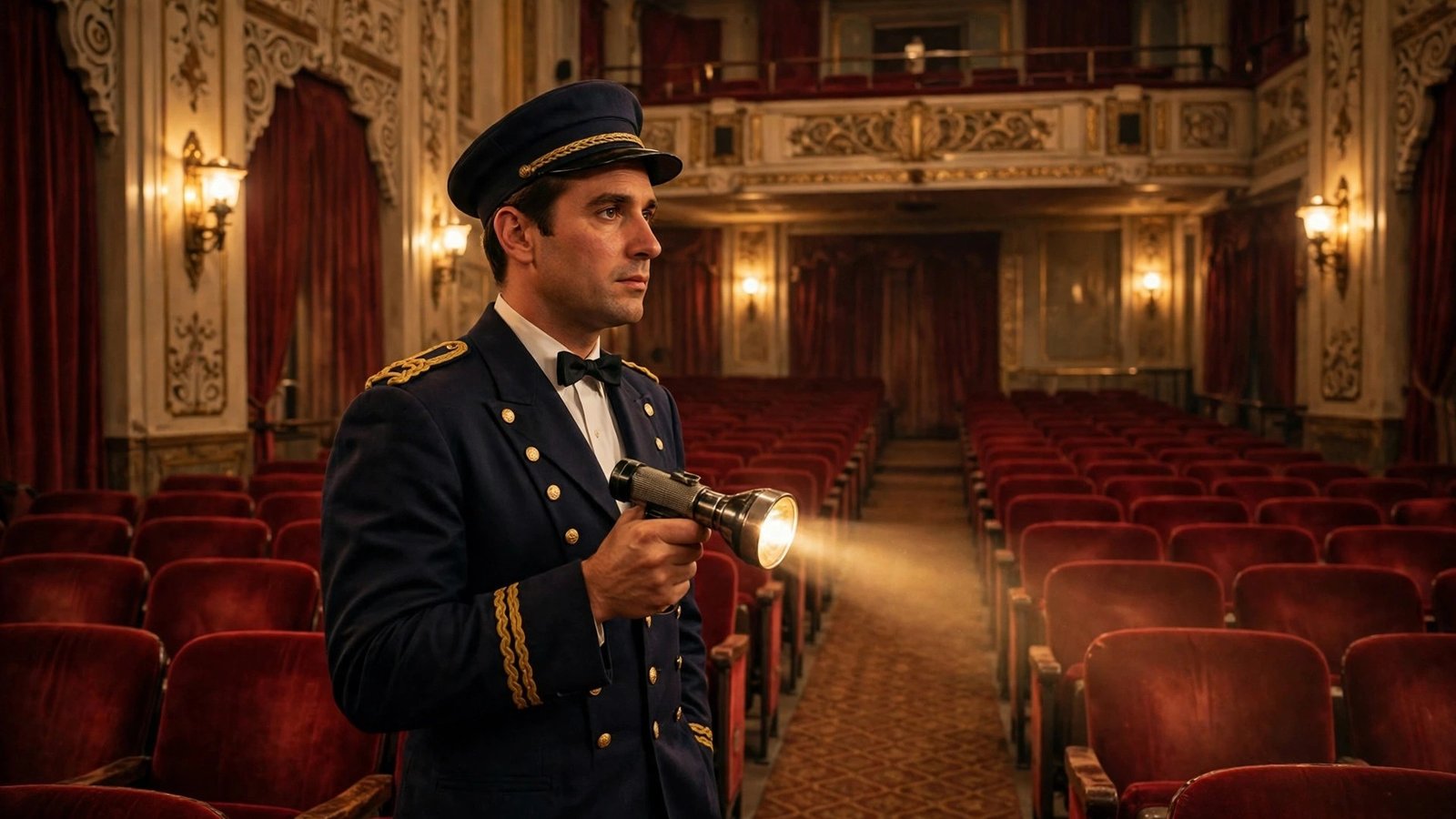
The Movie Palace Usher — What America Lost
Going to the movies used to be an occasion, and the usher was the one who made it feel that way.
The great movie palaces of the 1920s were built like cathedrals, with marble staircases and chandeliers and velvet curtains as wide as a house. You did not just walk in and find a seat. You were shown to one, by an usher in a uniform, with a flashlight in his hand and a smile on his face.
He led you down the dark aisle, past the rows of red seats, and found you a good spot, and handed you a program. If you came late, he waited for a quiet moment and slipped you in without a fuss. If you talked during the picture, he was the one who appeared beside you, quiet and polite, and asked you to keep it down.
The usher was part of the show. The organ rose up out of the floor and played before the movie, and the curtain opened, and the usher stood at the back, watching over the crowd like a guardian. It was his job to make the palace feel grand, and he did it with a flashlight and good manners.
Then the palaces got too big to fill, and television kept people home, and the little multiplexes arrived with their plain rooms and their self-serve seats. The palaces were torn down or cut up into smaller rooms, and the usher’s uniform went into a closet.
Today you buy a ticket on your phone and find your own seat in the dark, and nobody shows you the way. The movie palace usher was a small job, but he was the difference between a building full of seats and a night out, and the night out has never felt quite as grand without him.