
The Corner Drugstore — What America Lost
He wrapped a birthday card in tissue paper. A kid buying a card for his mom, a comic for himself, and the pharmacist folded the tissue around the card like it was something fine. That was the corner drugstore.
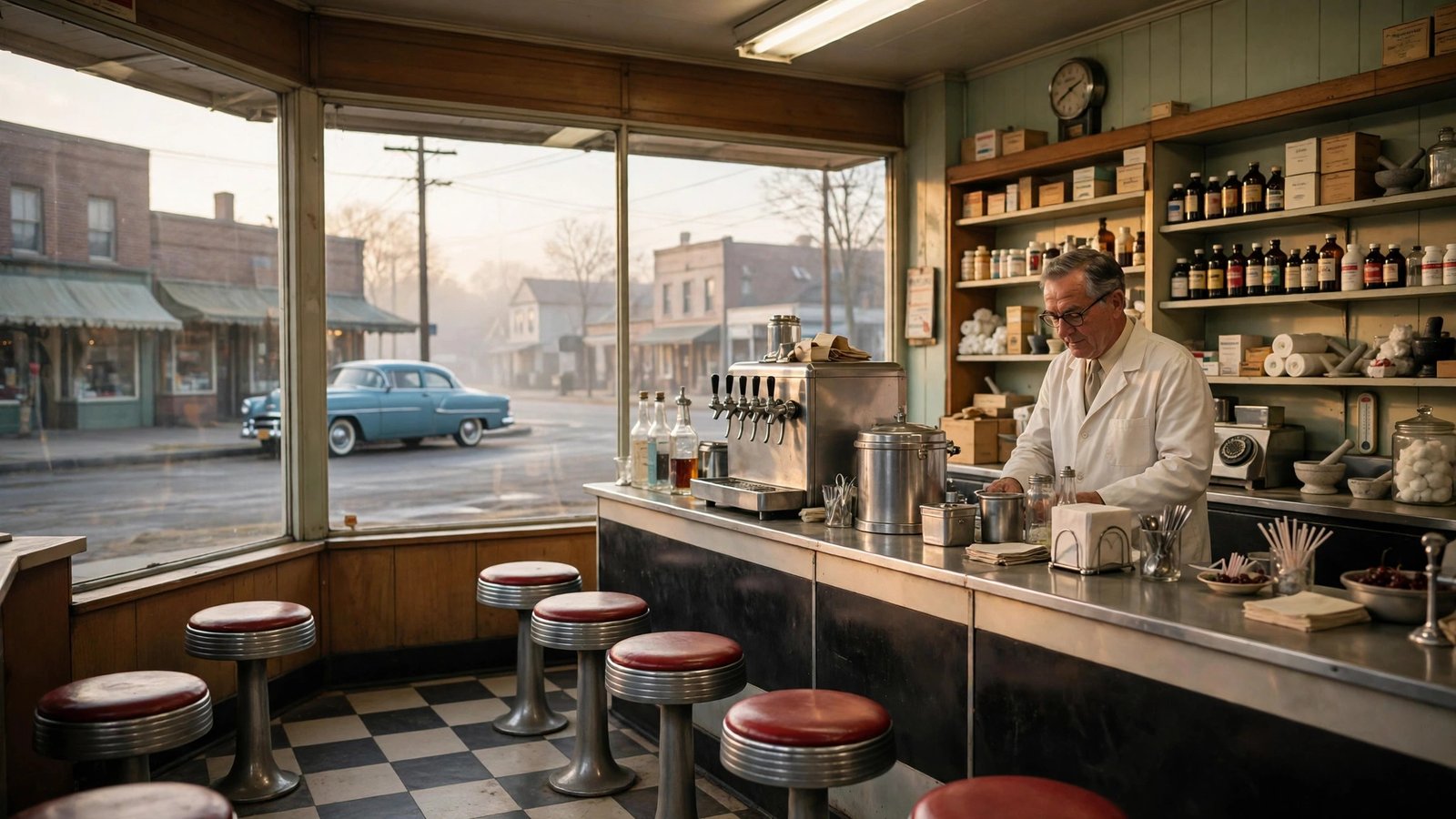
It was a small store, and it was the center of the block. The pharmacist stood behind the counter in a white coat, and he knew your name, and he knew your mother's name, and he knew what medicine you took and what you were allergic to. If you called at night, he answered, and if you needed something in a hurry, he opened the door.
The drugstore sold more than medicine. It sold toothpaste and shampoo and magazines and comic books and school supplies and candy by the piece. It had a soda fountain in the back, and a phone booth by the door, and a rack of postcards by the window. A child could buy a birthday card for his mother and a comic book for himself, all in the same visit.
It was a place to stop and talk. Neighbors met there, and caught up on the news, and asked the pharmacist a question they would never ask a doctor. He was not a doctor, but he was the next best thing, and he was always there.
Then the big chain stores came, and then the supermarkets started selling medicine, and then the medicine started arriving in the mail. The little corner stores closed, one by one, and the pharmacist who knew your name was replaced by a drive-through window and a voice on the phone.
Today the drugstore is a big store on a big road, and it sells everything the corner store sold, and more. But it does not know your name, and it does not open the door at night, and it is not on your corner. The corner drugstore was a neighbor, and the neighborhood has never been quite the same without it.