
The Bread Man — What America Lost
Long before the supermarket bakery, the bread came to the house, warm from the oven.
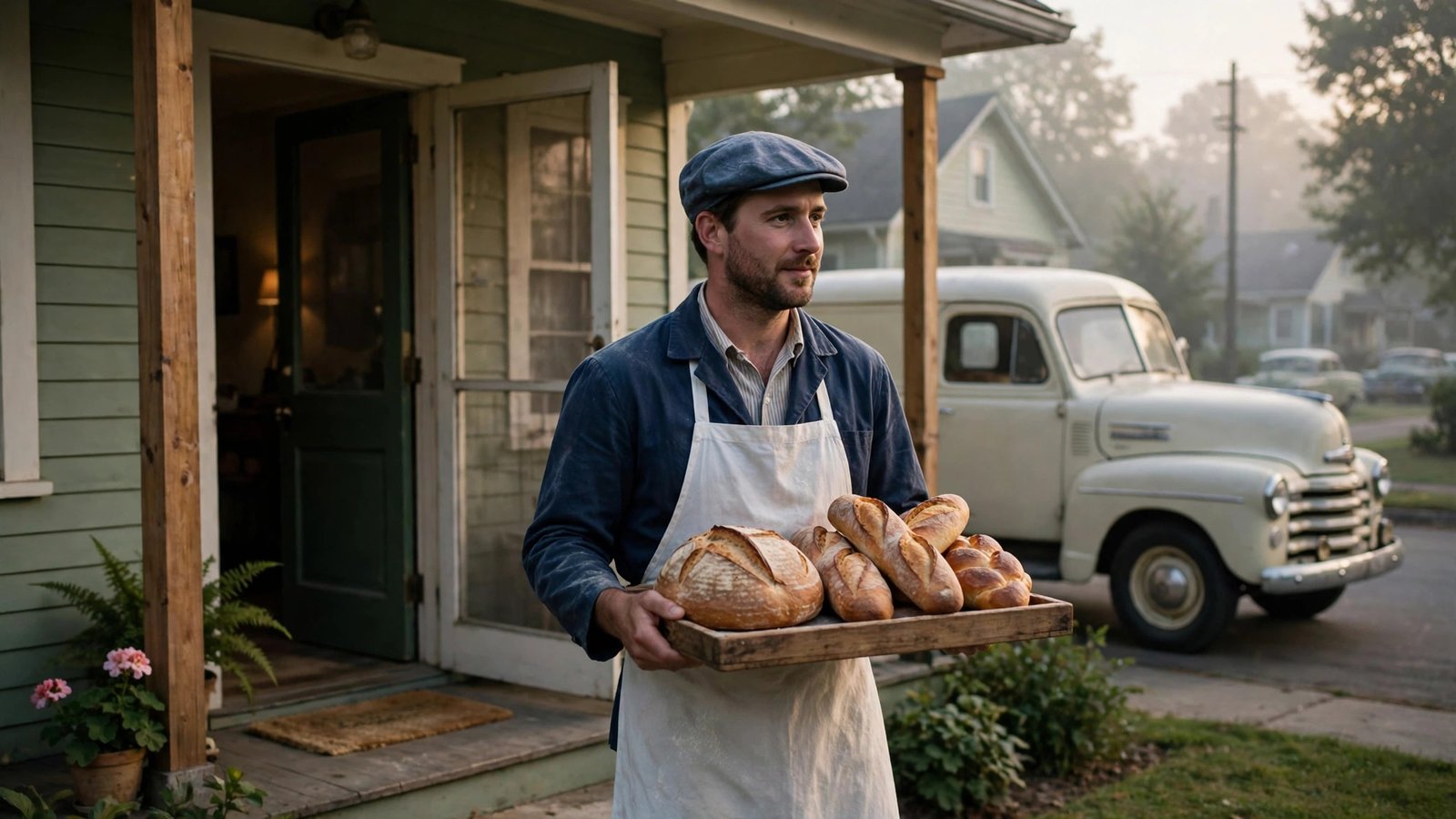
The bread man drove a delivery truck through the neighborhood, and the children knew the sound of it before they saw it. In Los Angeles, the Helms Bakery trucks ran from 1931 to 1969, and the driver would blow a little whistle, and the kids would come running, and the mothers would come to the door with a list.
He carried more than bread. There were rolls and buns and pies and cakes and doughnuts, all baked that morning, all stacked in the back of the truck in wooden trays. The driver knew the houses, and he knew what each one wanted, and he knew which child got the free cookie. He opened the back of the truck, and the smell of fresh bread rolled out onto the street.
It was a daily visit, and it was a friendly one. The bread man was a neighbor, and the truck was a bakery on wheels, and the bread was still warm when it got to the kitchen table. A family that bought from the bread man did not need to plan ahead, because the bread came to them.
Then the supermarkets arrived, with their own bakeries, and their own bread, and their own hours, and the trucks stopped running. The last Helms truck made its rounds in 1969, and the whistle went quiet.
Today the bread comes from a shelf, in a plastic bag, and it stays fresh for a week, which is a kind of miracle, and also a kind of loss. The bread man, with his whistle and his warm loaves and his free cookie, was a small piece of the morning, and the morning has never smelled quite the same since.