
The Ragman — What America Lost
“Rags! Old iron! Any rags today?” The voice stretched out long and low, down the whole alley, and you could set your morning by it. Nobody said recycling back then. We had a ragman, and he was doing it before anyone had a word for it.
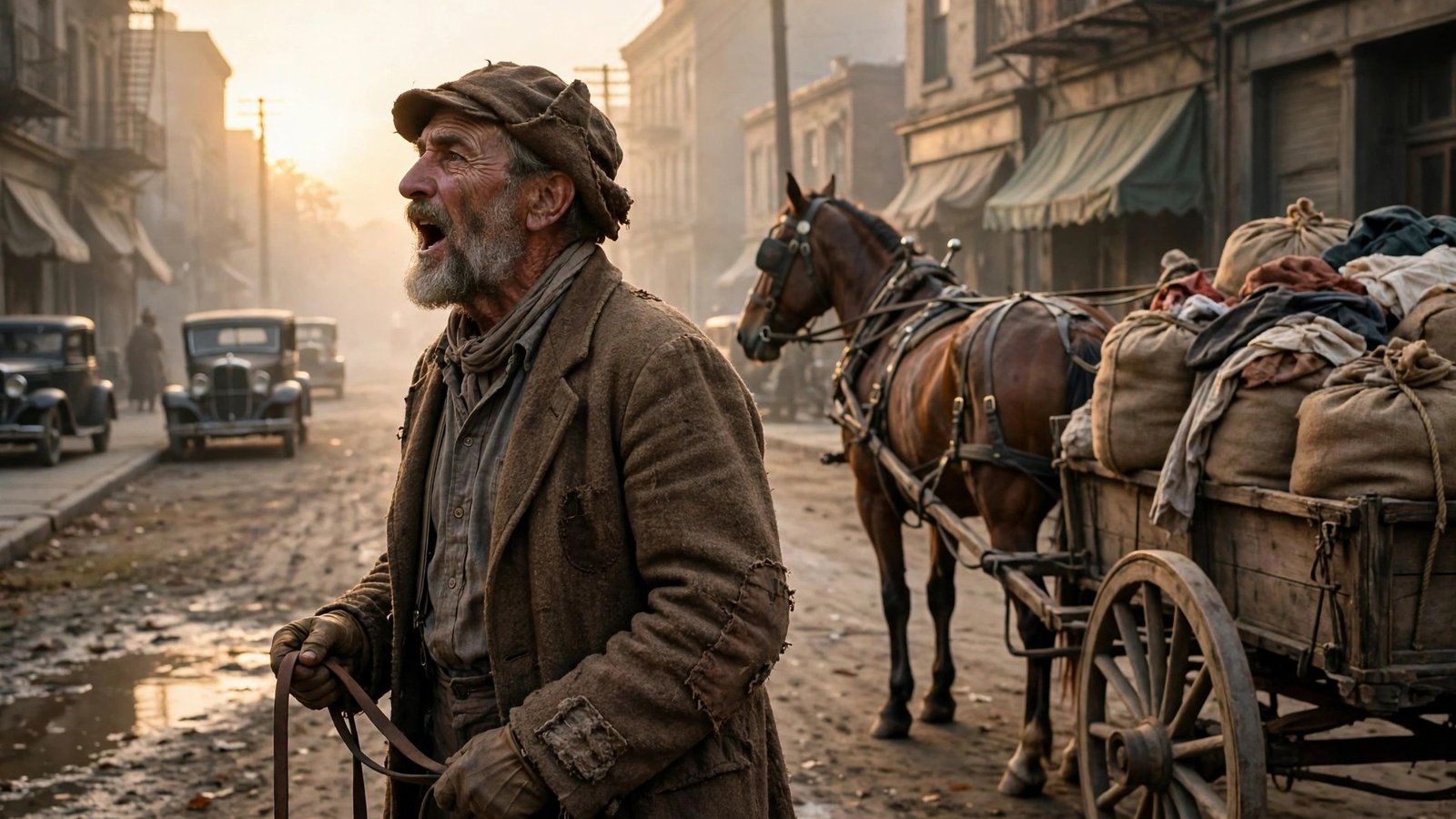
He came down the alley with a horse and a cart, calling out in a long, low voice. The housewives came out with their bundles, old clothes, worn-out sheets, torn curtains, anything made of cloth that had seen its last day as a shirt or a dress.
He paid for them, a few pennies a pound, and he piled them high on the cart, and when the cart was full he drove it to the rag dealer, who sold the rags to the paper mills, where they were made into paper, and to the factories, where they were made into wiping cloths. Nothing was wasted. The ragman took what the house was finished with, and he turned it into something useful again.
He was a familiar figure, and a poor one, and a necessary one. The children followed the cart, and the dogs barked at the horse, and the ragman's call was one of the sounds of the neighborhood, as regular as the church bells and the ice man's wagon.
Then the world got richer, and the clothes got cheaper, and the old rags went into the trash instead of onto the cart. The paper mills stopped buying rags, and the rag dealers closed, and the horse and cart disappeared from the alley.
Today we put our old clothes in a bag and drop them at a bin, and we call it recycling, and it is. But the ragman, with his horse and his cart and his long call, was recycling when nobody was proud of it. Just a man, making a living out of what other people threw away.