
The Shoeshine Stand — What America Lost
In the train station, in the hotel lobby, in the barbershop, there was a row of high chairs, and a man with a rag, and a shine that could make a tired pair of shoes look new.
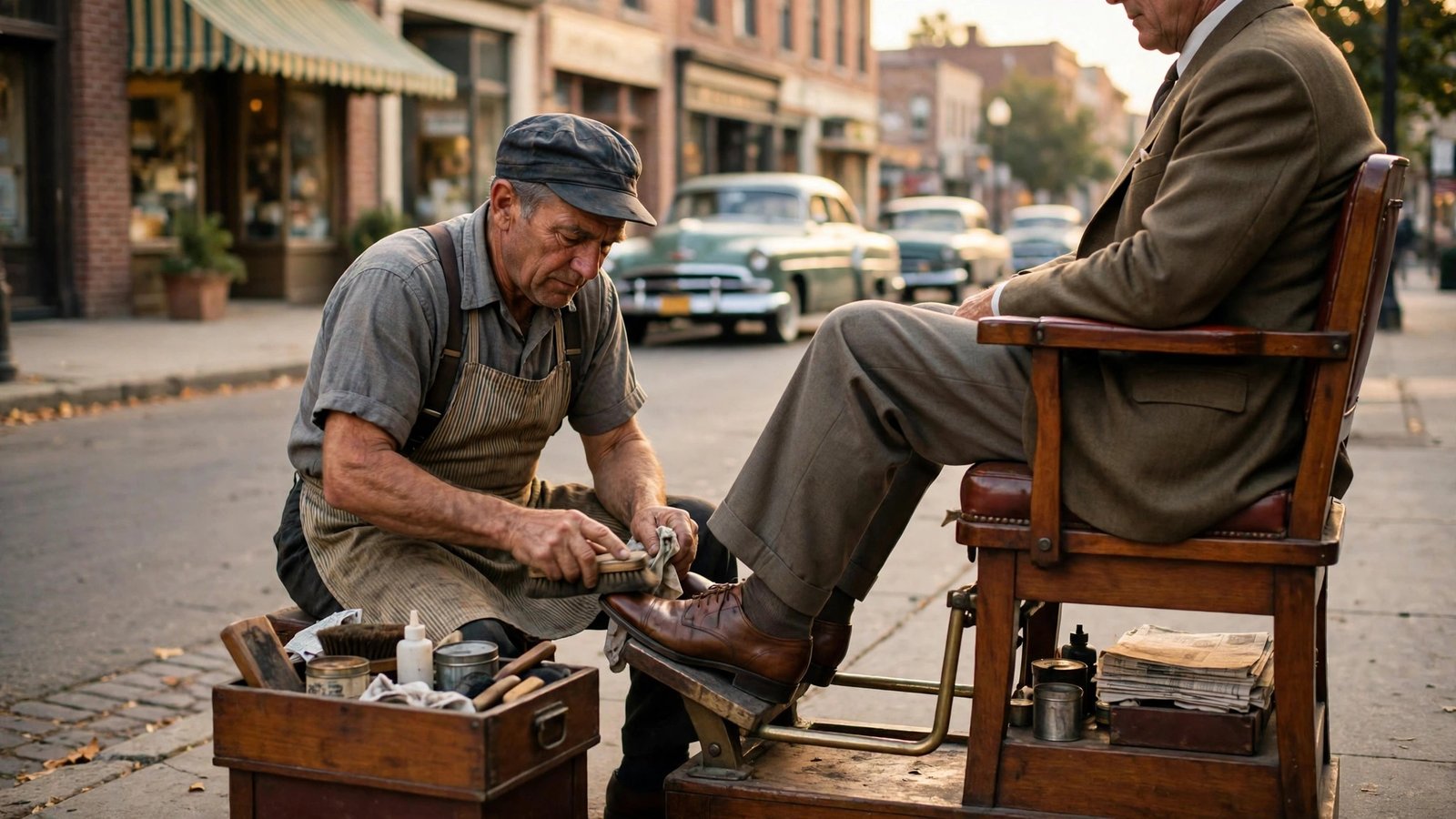
The shoeshine stand was a small kingdom. You climbed up into the chair, put your feet on the brass rests, and the shoeshine man went to work. He brushed off the dust, he rubbed in the polish, he worked the brush in quick circles, and then he snapped the cloth — a fast, loud crack that echoed through the station — and your shoes came back gleaming.
It was a quick visit, and it was a ritual. The businessman on his way to a meeting, the soldier on leave, the traveler waiting for a train — they all stopped at the stand, paid a dime, and walked away feeling a little sharper than when they sat down. The shoeshine man knew his regulars, and he knew their shoes, and he knew when a man needed a shine and when he needed a little conversation.
It was honest work, and it was skilled work, and a good shine was a thing of beauty. The rag snapped, the brush sang, and the leather shone like a mirror. The men who did it took pride in it, and the customers knew it.
Then the shoes changed, and the clothes changed, and the train stations emptied out. Sneakers replaced leather shoes, and the suit gave way to something softer, and nobody needed a shine every morning anymore. The stands closed, one by one, and the chairs were carried away.
Today a shoeshine is a rare thing, found in an airport or a hotel, and the snap of the rag is a sound most people have never heard. The shoeshine stand was a small place, and a quick visit, and a little dignity for a dime, and the stations have never looked quite as polished without it.