
The Lunch Counter — What America Lost
There was a place in America where you could sit down, spin on a stool, and get a meal for the change in your pocket.
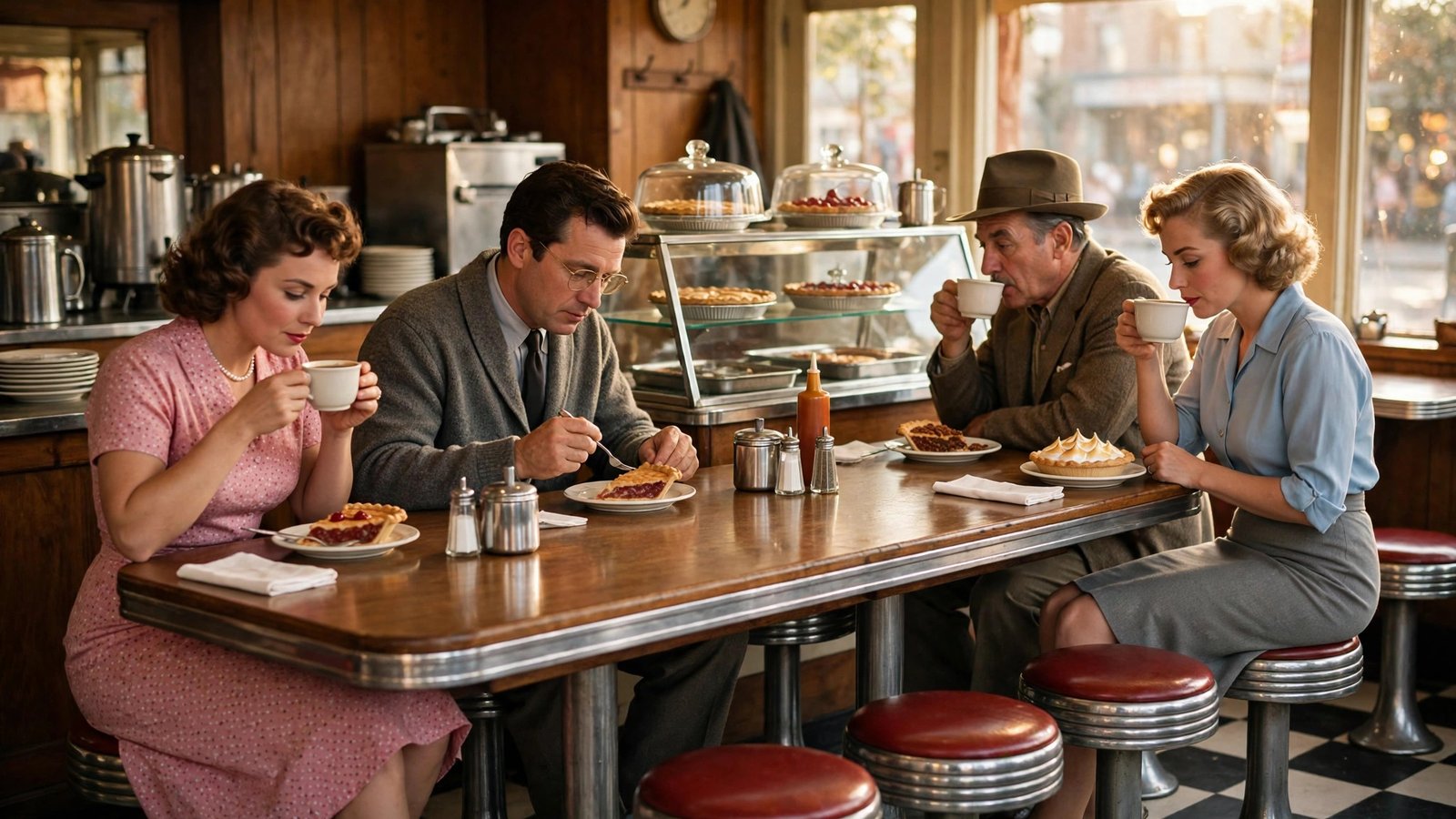
The lunch counter was the heart of the five-and-dime, and of the drugstore, and of the department store. A long counter, a row of swivel stools, a cup of coffee for a dime, and a sandwich for a quarter. The waitress knew the regulars, and she called them honey, and she knew how they took their coffee before they asked.
It was the cheapest seat in town, and the friendliest. The farmer came in from the fields, the office girl on her lunch hour, the schoolboy after class, and they all sat side by side, shoulder to shoulder, eating the same food off the same plates. The lunch counter did not care who you were, as long as you had a dime and a hunger.
And it was also, for a moment in American history, the most important seat in the country. On the first day of February in 1960, four young men sat down at a lunch counter in Greensboro, North Carolina, and asked to be served, and were refused, because of the color of their skin. They stayed in their seats, and they came back the next day, and the day after, and the lunch counter became the front line of a movement that changed the nation.
Then the fast-food restaurants arrived, and the five-and-dimes closed, and the counters were pulled out, one by one. The stools were sold, the coffee pots went cold, and the cheapest seat in town was gone.
Today you can still find a lunch counter here and there, kept alive as a memory. But the long counter where the whole town used to sit, where a dime bought you coffee and a little company, is mostly gone. And the lunch counter will always be remembered, not just for the food, but for the day four young men sat down and refused to get up.