
The Corner Newsstand — What America Lost
On the corner, where the street met the avenue, there was a little wooden stand, and it sold the whole world.
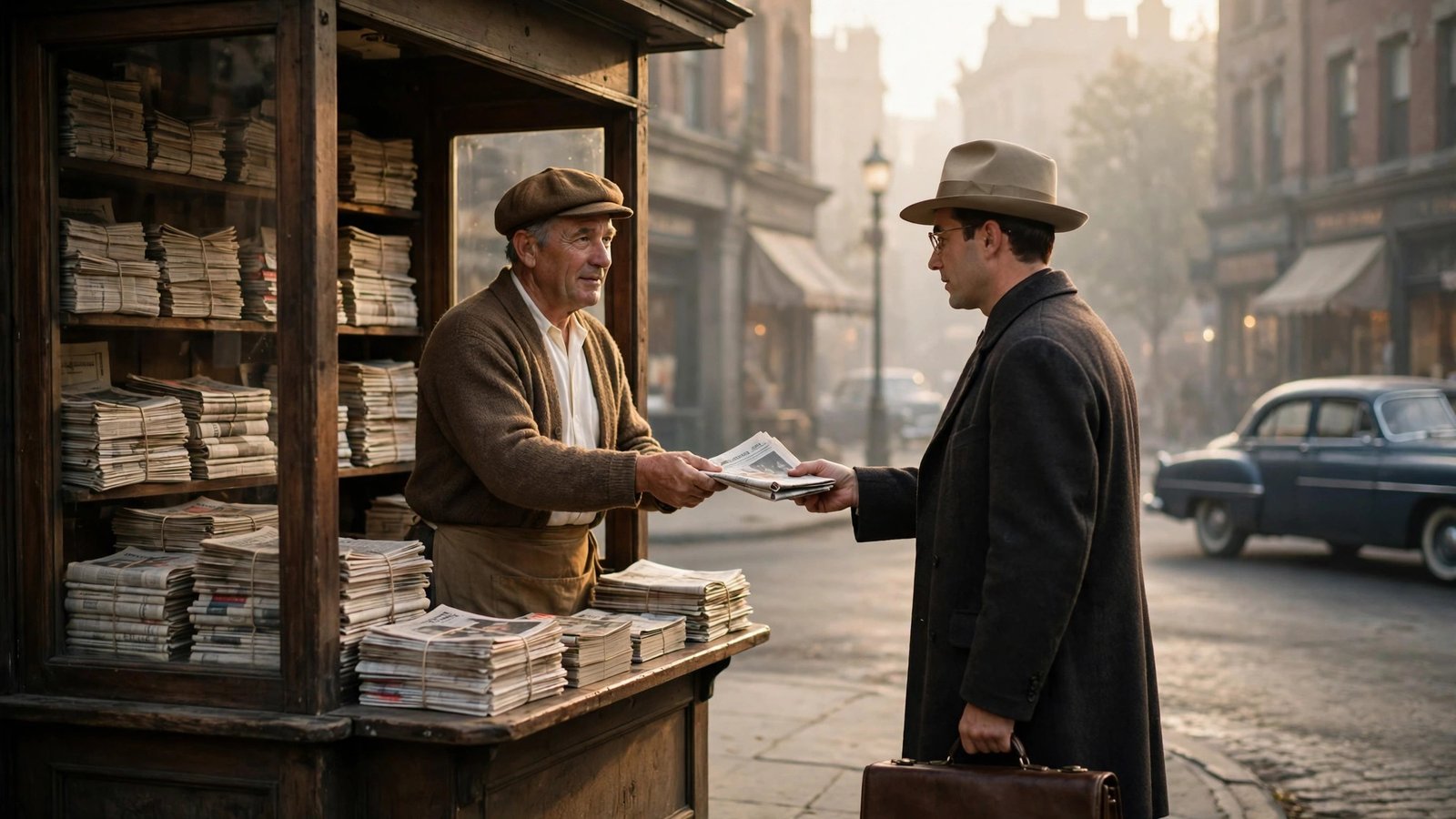
The corner newsstand was a small box of a shop, open to the street, with stacks of newspapers on one side and rows of magazines on the other. The morning papers, the evening papers, the Sunday papers, thick as a brick. The magazines — Life and Look and Sports Illustrated, the comic books for the kids, the movie magazines for the girls, the car magazines for the boys. Everything was there, on the corner, before the sun was fully up.
The newsstand man knew his customers. He knew which paper you read, and which magazine you bought on Fridays, and he had your copy ready before you asked. He knew the regulars by name, and he knew the news before anyone else, because he had read the headlines before the papers were even stacked.
It was a place to stop and talk. The men on their way to work stopped for a paper and a word about the game last night. The kids stopped for a comic book and a piece of gum. The stand was a meeting place, a little island of talk in the middle of the morning rush.
Then the papers got thinner, and the magazines got thinner, and the news started arriving on a screen instead of on a corner. The stands closed, one by one, and the wooden boxes were carried away, and the corner was left empty.
Today a few newsstands are still standing, in the big cities, kept alive by the people who remember. But the corner stand, where the newsman knew your paper and your name, is mostly gone, and the corner has never felt quite as busy, or quite as friendly, since.