
The Shoe Repairman — What America Lost
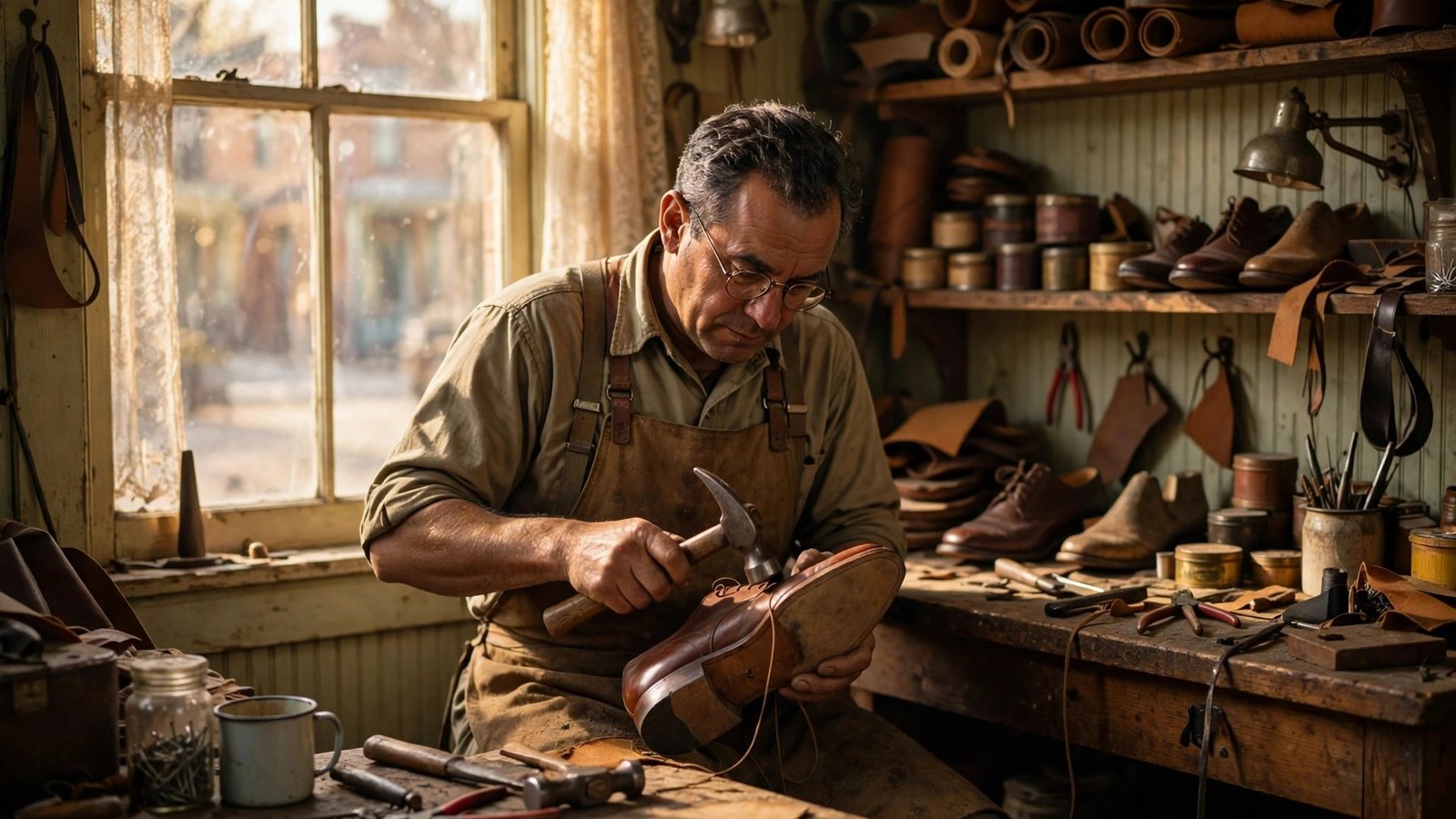
On a side street in every town, there was a little shop that smelled of leather and glue, and in it sat the shoe repairman.
He was called a cobbler, and he was a craftsman. You brought him a pair of shoes with a worn-down heel, or a sole coming loose, or a scuff that would not buff out, and he took them, and he looked at them, and he said, “Pick it up Thursday.” And on Thursday, the shoes were waiting for you, with a new heel and a new sole, polished and shining, good for another year.
It was a simple idea: a pair of shoes was worth keeping. The leather was good, the shoes fit your feet, and the repairman could make them last. He sewed and glued and nailed and polished, and he did it by hand, and the work was honest. A pair of shoes that had been to the cobbler was a pair of shoes that had a history.
The shop was a quiet place, full of shoes in rows, waiting their turn. The cobbler worked at his bench, and the radio played, and the smell of leather filled the air. He knew the families on the street, and he knew their shoes, and he knew which child needed new heels before school started.
Then the shoes got cheaper, and the leather gave way to plastic, and one day it cost less to buy a new pair than to fix the old one. The little shops closed, one by one, and the smell of leather and glue went with them.
Today a worn-out pair of shoes goes into the trash, and nobody thinks twice about it. But the shoe repairman, with his bench and his hammer and his “Pick it up Thursday,” believed that a good thing was worth keeping, and that a pair of shoes, like a town, was worth taking care of.